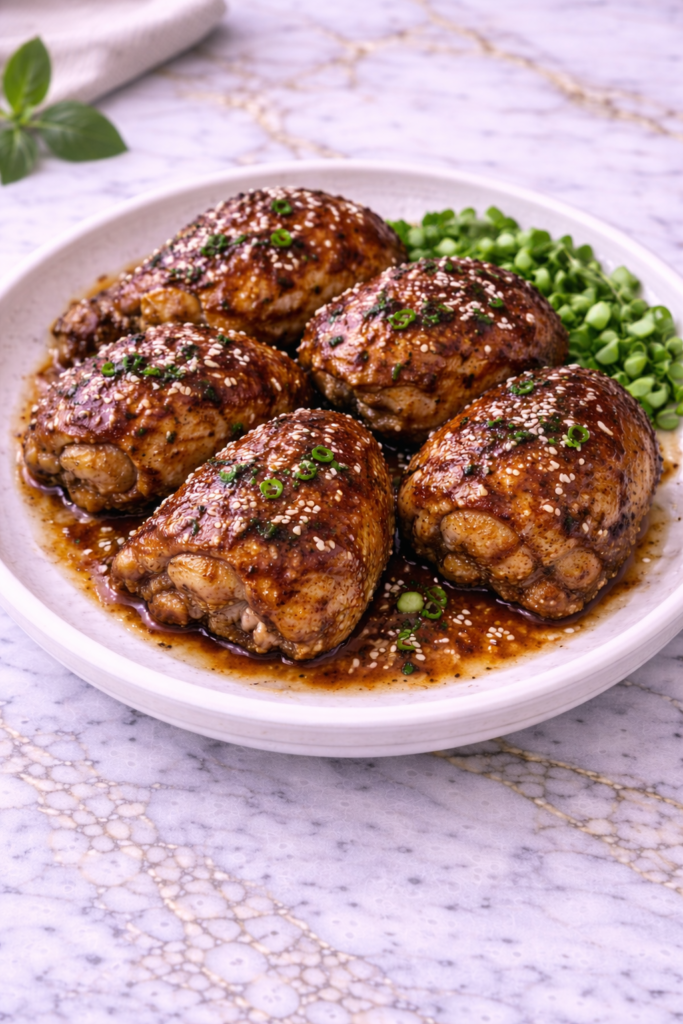
I bake teriyaki chicken thighs when I want something saucy and flavorful that doesn’t require much prep or skill. Chicken thighs stay juicy in the oven even with a sweet glaze, which makes them more forgiving than breasts when you’re not watching the clock closely.
I’ll show you how to make a simple homemade teriyaki sauce that’s way better than the bottled version, and how to baste the chicken so the glaze builds up and caramelizes without burning.
It takes about forty minutes and works over rice with steamed broccoli for a complete meal. You end up with sticky, savory chicken that tastes like takeout but costs a fraction of the price.

Why You’ll Love This Recipe
This recipe brings together everything a home cook wants: ease, flavor, and consistency. The chicken thighs stay tender and juicy while the sauce thickens into a rich glaze that coats every bite beautifully.
It’s also incredibly versatile, making it perfect for busy families or meal prep. You can serve it with rice, vegetables, or even shred it for wraps and bowls, making it a reliable go-to option throughout the week.
Another reason this dish stands out is how forgiving it is. Even if you’re new to cooking, the simple steps and clear results make it hard to get wrong, which builds confidence in the kitchen.
Serves: 6 people
This recipe comfortably serves six people, making it ideal for family dinners or small gatherings. If you’re cooking for fewer people, leftovers store well and can easily be repurposed into new meals the next day.
Ingredients You’ll Need
- 8 bone-in, skin-on chicken thighs
- 3/4 cup low-sodium soy sauce
- 1/2 cup brown sugar, packed
- 1/4 cup honey
- 3 cloves garlic, minced
- 1 tablespoon fresh ginger, grated
- 2 tablespoons rice vinegar
- 1 tablespoon sesame oil
- 1 tablespoon cornstarch
- 2 tablespoons water
- 1 tablespoon sesame seeds (optional, for garnish)
- 2 green onions, sliced (optional, for garnish)
Pro Tips
Choose bone-in, skin-on chicken thighs for the best flavor and moisture. They stay juicy during baking and develop a richer taste compared to boneless cuts.
Marinate the chicken if you have extra time, even just for 30 minutes. This helps the flavors penetrate deeper into the meat and enhances the overall taste.
Line your baking dish with foil or parchment paper to make cleanup easier. The teriyaki sauce can caramelize and stick, so this small step saves time later.
Baste the chicken halfway through baking to build a glossy, flavorful glaze. This also helps prevent the chicken from drying out.
Let the chicken rest for a few minutes after baking. This allows the juices to redistribute, keeping each bite tender and moist.
If you prefer a thicker sauce, simmer the leftover marinade separately and add a cornstarch slurry. This creates a rich glaze that can be drizzled over the finished dish.
Tools You’ll Need
- Large mixing bowl
- Measuring cups and spoons
- Garlic press or knife
- Grater (for ginger)
- Baking dish or sheet pan
- Aluminum foil or parchment paper
- Small saucepan
- Whisk
- Tongs
Substitutions and Variations
If you prefer a lighter option, you can use boneless, skinless chicken thighs or even chicken breasts. Just keep in mind that cooking times may vary slightly, and breasts may require more attention to avoid drying out.
For a gluten-free version, substitute the soy sauce with tamari or coconut aminos. Both options maintain the savory depth while accommodating dietary needs.
You can adjust the sweetness level by reducing the brown sugar or honey slightly. If you enjoy a bit of heat, adding a pinch of red pepper flakes or a drizzle of sriracha brings a subtle kick.
To add more texture and nutrition, consider baking vegetables like broccoli, carrots, or bell peppers alongside the chicken. They absorb the sauce beautifully and turn this into a complete one-pan meal.
For a deeper flavor profile, try adding a splash of pineapple juice to the sauce. It adds a mild tang and enhances the overall sweetness without overpowering the dish.
Make Ahead Tips
This recipe is ideal for preparing in advance, especially on busy weeks when time is limited. You can mix the teriyaki sauce and marinate the chicken up to 24 hours ahead, storing it covered in the refrigerator to deepen the flavor.
If you prefer to prep even further in advance, you can freeze the chicken directly in the marinade. When ready to use, thaw it overnight in the refrigerator, allowing the flavors to continue developing as it defrosts.
Cooked chicken also stores well, making it great for meal planning. Simply bake as directed, let it cool completely, and store portions for easy reheating throughout the week.
Instructions
Step 1: Prepare the Sauce
In a large mixing bowl, combine the soy sauce, brown sugar, honey, minced garlic, grated ginger, rice vinegar, and sesame oil. Whisk everything together until the sugar is mostly dissolved and the mixture is smooth and well blended.
Step 2: Marinate the Chicken
Place the chicken thighs into the bowl or a large resealable bag and pour the sauce over them. Toss to coat evenly, then cover and refrigerate for at least 30 minutes or up to overnight for deeper flavor.
Step 3: Preheat and Arrange
Preheat your oven to 400°F (200°C) and line a baking dish with foil or parchment paper. Arrange the chicken thighs skin-side up in a single layer, reserving the marinade for later use.
Step 4: Bake the Chicken
Bake the chicken for 30 minutes, then carefully baste with the reserved marinade. Return to the oven and continue baking for another 20–25 minutes until the chicken is fully cooked and the skin is caramelized.
Step 5: Thicken the Sauce
While the chicken finishes baking, pour the reserved marinade into a small saucepan and bring it to a gentle simmer. Stir in the cornstarch mixed with water and cook until the sauce thickens into a glossy glaze.
Step 6: Finish and Garnish
Remove the chicken from the oven and let it rest for a few minutes before serving. Drizzle the thickened sauce over the top and garnish with sesame seeds and sliced green onions if desired.
Serving Suggestions
Serve these baked teriyaki chicken thighs over a bed of fluffy white or brown rice to soak up the rich, savory sauce. The combination creates a comforting and satisfying meal that works well for both lunch and dinner.
Pair the chicken with simple steamed vegetables like broccoli, green beans, or carrots for a balanced plate. The mild flavors of the vegetables complement the bold teriyaki glaze without overpowering it.
For a lighter option, slice the chicken and serve it over a fresh salad with a sesame dressing. This creates a refreshing contrast while still highlighting the sweet and savory flavors.
You can also use the chicken in wraps or lettuce cups for a fun, hands-on meal. This is especially popular with kids and makes dinner feel a little more interactive.
If you’re hosting, consider serving it alongside noodles or fried rice for a more complete spread. It easily becomes the centerpiece of a flavorful, crowd-pleasing meal.
Leftovers and Storage
Store any leftover chicken in an airtight container in the refrigerator for up to four days. Make sure the chicken has cooled completely before sealing to maintain its texture and flavor.
To reheat, place the chicken in the oven at 350°F until warmed through, or microwave in short intervals to avoid overcooking. Adding a spoonful of extra sauce helps keep the chicken moist during reheating.
For longer storage, freeze the cooked chicken in a freezer-safe container for up to three months. Thaw overnight in the refrigerator before reheating for best results.
If possible, store the sauce separately to maintain the best texture. This allows you to reheat and drizzle fresh glaze over the chicken just before serving.
Nutrition and Benefits
- Chicken thighs are a great source of protein, helping support muscle growth and keeping meals satisfying and filling.
- The use of ginger and garlic adds natural antioxidants and anti-inflammatory properties to the dish.
- Baking instead of frying reduces excess oil while still delivering rich flavor and texture.
- Using low-sodium soy sauce helps control overall salt intake without sacrificing taste.
- This recipe can be easily balanced with vegetables and whole grains for a complete, nourishing meal.
Recipe FAQ
Can I use boneless chicken thighs instead?
Yes, boneless chicken thighs work well in this recipe and cook slightly faster. Be sure to reduce the cooking time and monitor closely to prevent overcooking. They may not be as rich as bone-in cuts but still deliver great flavor.
Can I make this recipe without marinating?
You can skip the marinating step if you’re short on time, and the dish will still taste good. However, allowing even a brief marination helps enhance the flavor and tenderness of the chicken.
How do I know when the chicken is fully cooked?
The internal temperature should reach 165°F when measured with a meat thermometer. The juices should run clear, and the skin should appear caramelized and slightly crisp.
Can I make the sauce less sweet?
Yes, you can reduce the amount of brown sugar or honey to suit your taste. Adjusting these ingredients allows you to control the sweetness while maintaining the savory balance.
Is it safe to use the marinade for the sauce?
Yes, as long as you bring the marinade to a full boil before thickening it. This ensures any bacteria from the raw chicken is eliminated, making it safe to consume.
Can I cook this recipe on the stovetop instead?
While baking provides even cooking and caramelization, you can cook the chicken in a skillet if needed. Just be sure to cook it thoroughly and allow the sauce to reduce properly.
What sides go best with this dish?
Rice, noodles, and steamed vegetables are classic pairings that complement the flavors well. You can also serve it with salads or roasted vegetables for a lighter option.
Conclusion
Baked Teriyaki Chicken Thighs is a dependable recipe that brings bold flavor and comforting simplicity to the table with very little effort. It fits seamlessly into busy routines while still delivering a meal that feels complete and satisfying.
With its tender texture, rich glaze, and family-friendly appeal, this dish is one you can turn to again and again. It offers consistent, delicious results that make it a reliable favorite in any home kitchen.