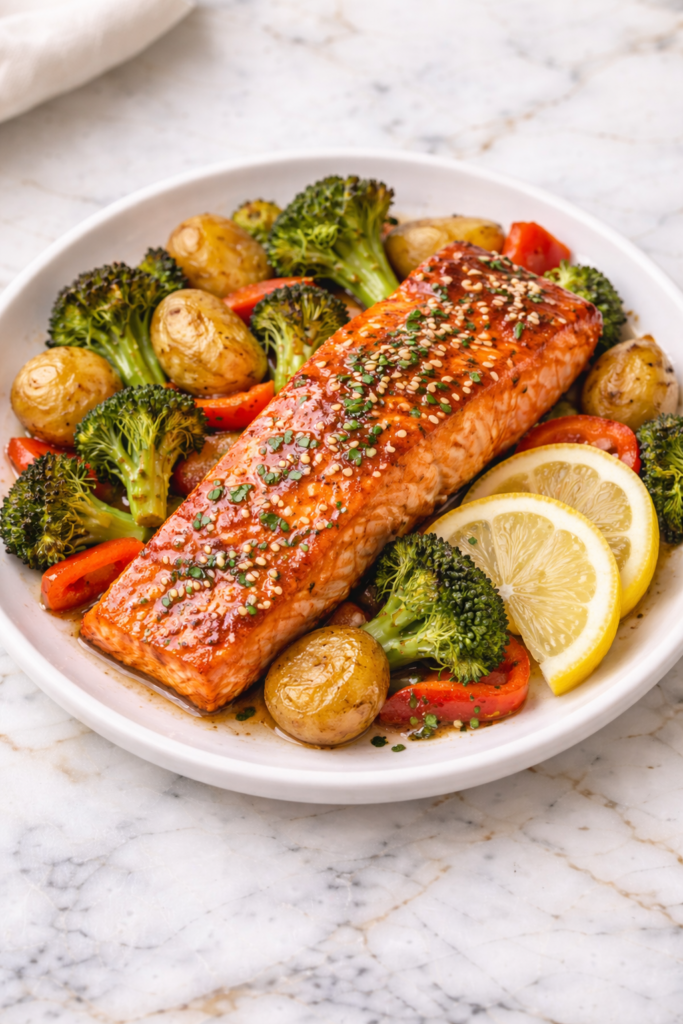
I started making this on weeknights when I wanted a dinner that felt a little special but came together on one pan without much effort.
Honey and garlic make a glaze that caramelizes beautifully on salmon in the oven, giving you those sticky, golden edges that taste as good as they look.
Everything goes on one sheet pan, which means cleanup is as easy as the cooking. I’ll show you how to make the glaze and time the salmon so it comes out perfectly cooked and full of flavor every time. It’s a reliable, impressive dinner that asks almost nothing of you on a busy evening.
Why You’ll Love This Recipe
Sheet Pan Honey Garlic Salmon is all about simplicity without sacrificing flavor. The honey garlic sauce creates a perfect balance of sweetness and savory depth, coating the salmon in a rich glaze that caramelizes beautifully in the oven. At the same time, the vegetables roast alongside the fish, absorbing all those delicious flavors while becoming tender and slightly crisp.
This recipe is also incredibly practical for everyday cooking. With everything prepared on a single sheet pan, it minimizes both cooking time and cleanup, making it ideal for busy families. Whether you’re cooking for a weeknight dinner or a relaxed weekend meal, it’s a dependable option that delivers consistent and satisfying results.
Serves: 4 people
This recipe comfortably serves four people with well-balanced portions of salmon and vegetables. It’s easy to scale up if you’re feeding a larger group by using an additional sheet pan. Leftovers also hold up well, making it a convenient option for next-day meals.
Ingredients You’ll Need
For the salmon:
- 4 salmon fillets (about 6 ounces each)
- 1 teaspoon salt
- ½ teaspoon black pepper
- 1 tablespoon olive oil
For the honey garlic sauce:
- ¼ cup honey
- 3 tablespoons soy sauce
- 4 cloves garlic, minced
- 1 tablespoon lemon juice
- 1 teaspoon Dijon mustard
For the vegetables:
- 2 cups broccoli florets
- 1 cup baby carrots
- 1 red bell pepper, sliced
- 1 tablespoon olive oil
- ½ teaspoon salt
- ¼ teaspoon black pepper
Optional for garnish:
- 1 tablespoon chopped fresh parsley
- Sesame seeds
- Lemon wedges
Pro Tips
For the best texture, choose salmon fillets that are similar in thickness so they cook evenly. This helps prevent thinner pieces from overcooking while thicker ones finish baking.
Line your sheet pan with parchment paper or foil for easy cleanup and to prevent sticking. This small step saves time and keeps the glaze from burning onto the pan.
Cut vegetables into similar-sized pieces so they roast evenly alongside the salmon. This ensures everything is perfectly cooked at the same time.
Do not overcook the salmon, as it can become dry quickly. The fish should flake easily with a fork and still appear slightly moist in the center.
Brush the honey garlic sauce over the salmon just before baking and again halfway through for a deeper flavor. This layering helps build a rich, glossy glaze.
If you prefer a slightly caramelized finish, broil the salmon for the last 1–2 minutes. Keep a close eye on it to prevent burning.
Tools You’ll Need
- Large sheet pan
- Parchment paper or aluminum foil
- Small mixing bowl
- Whisk or spoon
- Cutting board
- Sharp knife
- Measuring cups and spoons
- Tongs or spatula
Substitutions and Variations
You can substitute the salmon with other types of fish such as cod, trout, or tilapia. Just keep in mind that cooking times may vary depending on thickness and type of fish.
For a gluten-free version, use tamari or coconut aminos instead of soy sauce. This keeps the same savory flavor while accommodating dietary needs.
If you prefer different vegetables, try swapping in zucchini, asparagus, or green beans. These options roast well and pair nicely with the honey garlic sauce.
To add a bit of heat, include red pepper flakes or a drizzle of sriracha in the sauce. This creates a sweet and spicy variation that adds extra depth.
You can also make the dish heartier by serving it with cooked rice, quinoa, or noodles. These additions help turn the meal into a more filling option while soaking up the flavorful sauce.
Make Ahead Tips
Sheet Pan Honey Garlic Salmon is a great option when you want to get ahead on dinner without sacrificing freshness or flavor. You can prepare the honey garlic sauce up to two days in advance and store it in an airtight container in the refrigerator. This allows the flavors to meld together and makes dinner assembly much quicker.
The vegetables can also be washed, chopped, and stored ahead of time, so everything is ready to go when you need it. If you want to prep even further, you can portion the salmon and keep it refrigerated until ready to cook. For the best texture, it’s recommended to bake the salmon fresh rather than fully cooking it ahead of time.
Instructions
Step 1: Preheat and Prepare the Pan
Preheat your oven to 400°F (200°C) and line a large sheet pan with parchment paper or aluminum foil. This helps prevent sticking and makes cleanup easier once the meal is finished. Arrange the oven rack in the center for even cooking.
Step 2: Prepare the Vegetables
Place the broccoli florets, baby carrots, and sliced red bell pepper onto the sheet pan. Drizzle with olive oil, then season with salt and black pepper. Toss everything together until evenly coated, then spread the vegetables out in a single layer.
Step 3: Start Roasting the Vegetables
Place the sheet pan in the oven and roast the vegetables for about 10 minutes. This gives them a head start so they become tender and slightly caramelized by the time the salmon is finished cooking. Stir them halfway through if needed for even roasting.
Step 4: Prepare the Salmon
While the vegetables are roasting, pat the salmon fillets dry with paper towels and place them on a plate. Drizzle with olive oil and season with salt and black pepper. This simple seasoning helps enhance the natural flavor of the salmon.
Step 5: Make the Honey Garlic Sauce
In a small bowl, whisk together the honey, soy sauce, minced garlic, lemon juice, and Dijon mustard until well combined. The sauce should be smooth and slightly thick, with a balanced sweet and savory aroma. Set it aside until ready to use.
Step 6: Add Salmon to the Pan
Remove the sheet pan from the oven and push the vegetables to the sides to make space in the center. Place the salmon fillets on the pan, leaving a bit of space between each piece. Spoon or brush a generous amount of the honey garlic sauce over each fillet.
Step 7: Bake Everything Together
Return the sheet pan to the oven and bake for 10–12 minutes, depending on the thickness of the salmon. Halfway through, spoon additional sauce over the salmon for extra flavor. The salmon should flake easily with a fork when done.
Step 8: Optional Broil for Finish
For a slightly caramelized and glossy finish, switch the oven to broil for the last 1–2 minutes. Keep a close eye on the salmon to prevent burning, as the honey in the sauce can caramelize quickly. This step adds a beautiful texture and depth of flavor.
Step 9: Garnish and Serve
Remove the pan from the oven and let the salmon rest for a couple of minutes. Sprinkle with chopped fresh parsley and sesame seeds, and add a squeeze of fresh lemon juice if desired. Serve warm directly from the sheet pan or plated individually.
Serving Suggestions
This dish pairs wonderfully with a side of fluffy white or brown rice, which absorbs the sweet and savory sauce beautifully. The combination creates a balanced and satisfying meal that feels complete without needing much else.
You can also serve it with quinoa or couscous for a slightly different texture and added nutritional value. These grains complement the salmon while keeping the meal light and wholesome.
For a lower-carb option, consider serving the salmon and vegetables on their own or alongside cauliflower rice. A simple green salad with a light vinaigrette can also add freshness and balance to the plate.
If you’re hosting or serving guests, adding warm crusty bread on the side allows everyone to enjoy every bit of the flavorful sauce. It’s a simple addition that makes the meal feel even more comforting.
Leftovers and Storage
Leftovers of Sheet Pan Honey Garlic Salmon can be stored in an airtight container in the refrigerator for up to three days. Allow the salmon and vegetables to cool completely before storing to maintain the best texture. Keeping them together helps preserve the flavor of the dish.
When reheating, use a low oven temperature or warm gently on the stovetop to prevent the salmon from drying out. You can also use a microwave in short intervals, though it’s best to cover the dish to retain moisture. Adding a small splash of water or broth can help refresh the sauce.
If you plan to freeze leftovers, store the salmon separately from the vegetables for better texture upon reheating. Freeze in airtight containers for up to two months, then thaw overnight in the refrigerator before reheating gently.
Nutrition and Benefits
- Salmon is rich in omega-3 fatty acids, which support heart health and brain function. Including it regularly in meals can contribute to a balanced and nourishing diet.
- This recipe provides a good source of lean protein, helping to keep you full and satisfied. It’s a great option for maintaining energy throughout the day.
- The variety of vegetables adds fiber, vitamins, and antioxidants, supporting overall wellness. These nutrients also help create a well-rounded and colorful meal.
- Honey and garlic contribute natural flavor without relying on heavily processed ingredients. Garlic also contains compounds that may support immune health.
- Cooking everything on one sheet pan reduces the need for excess oils and fats, making this a lighter yet still satisfying option for family dinners.
Recipe FAQ
Can I use frozen salmon for this recipe?
Yes, you can use frozen salmon, but it should be fully thawed before cooking. Pat it dry thoroughly to remove excess moisture, which helps the sauce adhere better. This ensures the best texture and flavor.
How do I know when the salmon is fully cooked?
Salmon is done when it flakes easily with a fork and reaches an internal temperature of 145°F. The center should appear opaque but still moist. Avoid overcooking, as it can become dry quickly.
Can I make this recipe without soy sauce?
Yes, you can substitute soy sauce with tamari or coconut aminos for a similar flavor. If you prefer a lower-sodium option, choose a reduced-sodium version. The overall taste will remain balanced and delicious.
What vegetables work best with this recipe?
Broccoli, carrots, and bell peppers are great choices because they roast well and hold their texture. You can also use asparagus, zucchini, or green beans depending on your preference. Just adjust cooking times if needed.
Can I prepare everything on one pan without pre-roasting the vegetables?
Pre-roasting helps ensure the vegetables are fully cooked and slightly caramelized. If you skip this step, they may end up undercooked compared to the salmon. It’s a simple step that improves overall results.
Is this recipe suitable for meal prep?
Yes, this recipe works very well for meal prep and can be portioned into containers for easy lunches or dinners. Store it in the refrigerator and reheat gently to maintain the best texture. It’s both convenient and flavorful.
Can I make the sauce thicker?
If you prefer a thicker sauce, you can simmer it briefly on the stovetop before adding it to the salmon. Another option is to mix a small amount of cornstarch with water and stir it into the sauce. This creates a slightly richer glaze.
Conclusion
Sheet Pan Honey Garlic Salmon is a simple, reliable recipe that makes dinnertime feel easy and satisfying.
It comes together quickly with minimal cleanup while still delivering bold, comforting flavors the whole family can enjoy.
With its balance of wholesome ingredients and rich taste, it’s a meal you can count on again and again.
It brings consistency, ease, and warmth to the table, making it a dependable favorite for any night of the week.